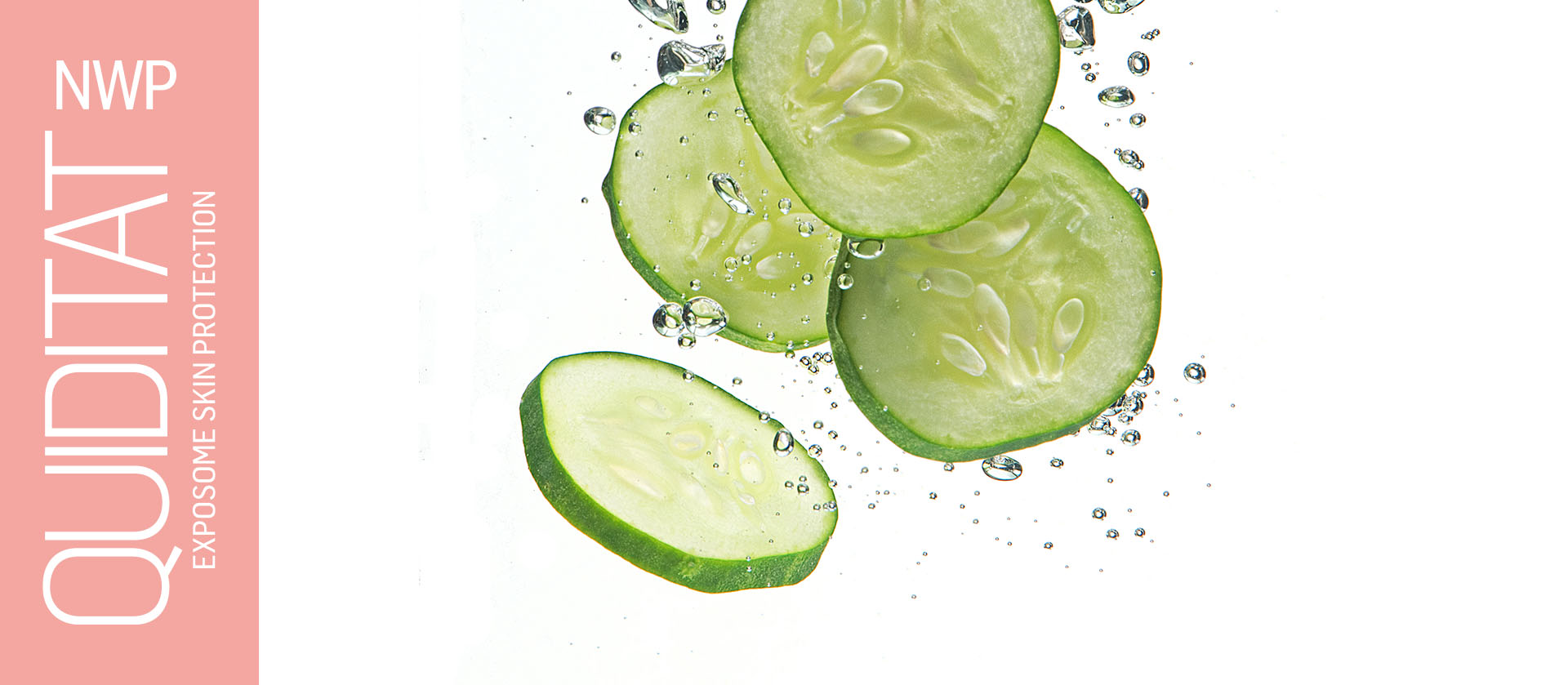
Offers broad anti-inflammatory activity and protective action against air pollution (PAH) and smoke. It is a high-performance ingredient composed of active cucumber biomolecules, enhanced by synergy with a polymeric network of marine algae polysaccharides.
The aging exposome, comprising environmental factors like solar radiation, pollution (e.g. PAHs) and lifestyle, significantly impacts skin health, driving premature aging.
These factors induce damage through oxidative stress and inflammation, leading to structural degradation of the skin. This compromises the skin barrier, emphasizing the need to mitigate harm for overall cutaneous health.
Natural ingredients such as cucumber, with its antioxidant and soothing properties, and Hypnea musciformis, a source of beneficial sulfated polysaccharides, combat skin issues related to environmental stressors.
Cucumber (Cucumis sativus), historically used in ancient skincare and still applied topically today, benefits the skin due to its composition. Its high water content provides hydration, while antioxidants and anti-inflammatory compounds help neutralize oxidative stress, soothe irritation, and support skin barrier function.
These properties contribute to its traditional use for hydrating and calming compromised skin. On the other hand, industrial products based on cucumber extracts do not have the same benefits. Conventional processes cannot extract the bioactive molecules of cucumber, thus nullifying benefits. Aware of this challenge, ASSESSA scientists developed a unique technology to extract and enhance the activity of all valuable components of the cucumber.
(In vitro tests)

QUIDITAT NWP is efficient in the protection of cells exposed by surfactants.

QUIDITAT NWP reduces inflammation caused by UV radiation, and the release of PGE by 90% in cultures of keratinocytes submitted to irradiation with UVB. It is more efficient than Beta-glucan and Echinacea extract as an anti-inflammatory ingredient.

QUIDITAT NWP can reduce the release of prostaglandin E by 88% when phenol is applied and by 83% when salicylic acid is applied to a culture of human keratinocytes.

(Ex-vivo tests)

Exposure to pollution stress promoted an increase of 22.04% in TNF-α synthesis compared to basal control. The evaluated product with QUIDITAT NWP 2% showed a protective effect, reducing TNF-α production by 19.20% compared to the pollution group and 14.94% lower than its placebo.
AhR (Aryl hydrocarbon Receptors) is crucial for skin health and immunity, acting as a sensor triggering responses to pollution and light. Reducing AhR expression directly protects skin from pollutants.

Exposure to pollution stress promoted an increase of 66.27% in AhR synthesis. QUIDITAT NWP 2% reduces AhR receptor expression by 44.44% compared to control and 40.00% compared to placebo.